A hands-on AI module. Run on your campus, by our team.
A workshop where your students build with AI on a real company question. It fits into a course you already teach, and needs no technical faculty.
A full room, on your campus
// the hall fills, the workshop starts
ESCP Berlin, September 2026: 800 at the conference, then 210 students in 34 teams over two days.
The jobs your students are heading for are changing with AI. Employers now hire people who have already used it on real work.
That is what we add to your programme: hands-on experience of business with AI, on a real company question, before your students graduate.
0%
of employers expect AI to transform their business by 2030
0%
of workers' core skills are expected to change by 2030
0%
of organisations already use AI in at least one function
0
students trained in one cohort, at ESCP Berlin
Sources: World Economic Forum, Future of Jobs Report 2025 · McKinsey, The State of AI, 2025 · ATELIA and ESCP Berlin, September 2026.
AI availability alone does not improve strategic decision quality. What determines the outcome is reflexive, iterative engagement with the tool.
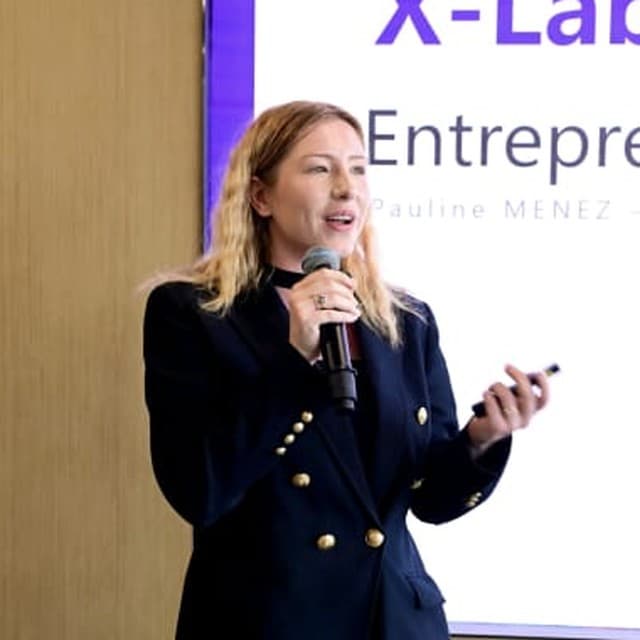 Pauline MenezCo-founder · master's research on AI and executive decisions, Tsinghua University, 2026
Business experience with AI, before they graduate.
What a lecture cannot give them: a real company question, the tools in their hands, and work they can show an employer.
What the company asked
A real business question
A case from a company, with its data and its trade-off, in the field your students are heading for.
AI tools in their hands
They build the answer themselves with an AI agent, with our team beside them, not a demo watched from a seat.
Work they can show
A deployed project and written feedback: something concrete for a CV, a portfolio or an interview.
Seen by companies
The company behind the case sees the work, and can meet the students who did it.
One session, three phases, and what stays after it. Half a day to two days, on your campus.

- // 01
Framing: strategy in the room
A strategic briefing on the AI ecosystem and the token economy, the geopolitics (US and China, the EU AI Act, sovereignty), and what gets automated versus what stays human. Result: the problem worth building.
- // 02
Building: teams at the keyboard
Teams build with an AI coding agent: a first round to frame the problem, a second to build and refine the tool. No technical background required. Result: a working product.
- // 03
Proof: a live demo in front of the room
Each team presents its tool working, gets feedback from mentors and peers, and the best builds are shown. Result: a live pitch and written feedback.
- // 04
After: feedback and the platform
Your faculty receives written feedback for each team. Students keep the platform, its community across schools and its live company cases.
Bachelor, master or executive. No technical background required.
Book a callThree pillars: their job, the new jobs, and how to build with AI.
Not a coding course. What changes in the work your students are heading for, and enough practice to do it themselves. Hover a pillar to see what it covers.
Hover or tap a pillar
Three pillars, every session
What changes in their work, the jobs it creates, and how to build with it.
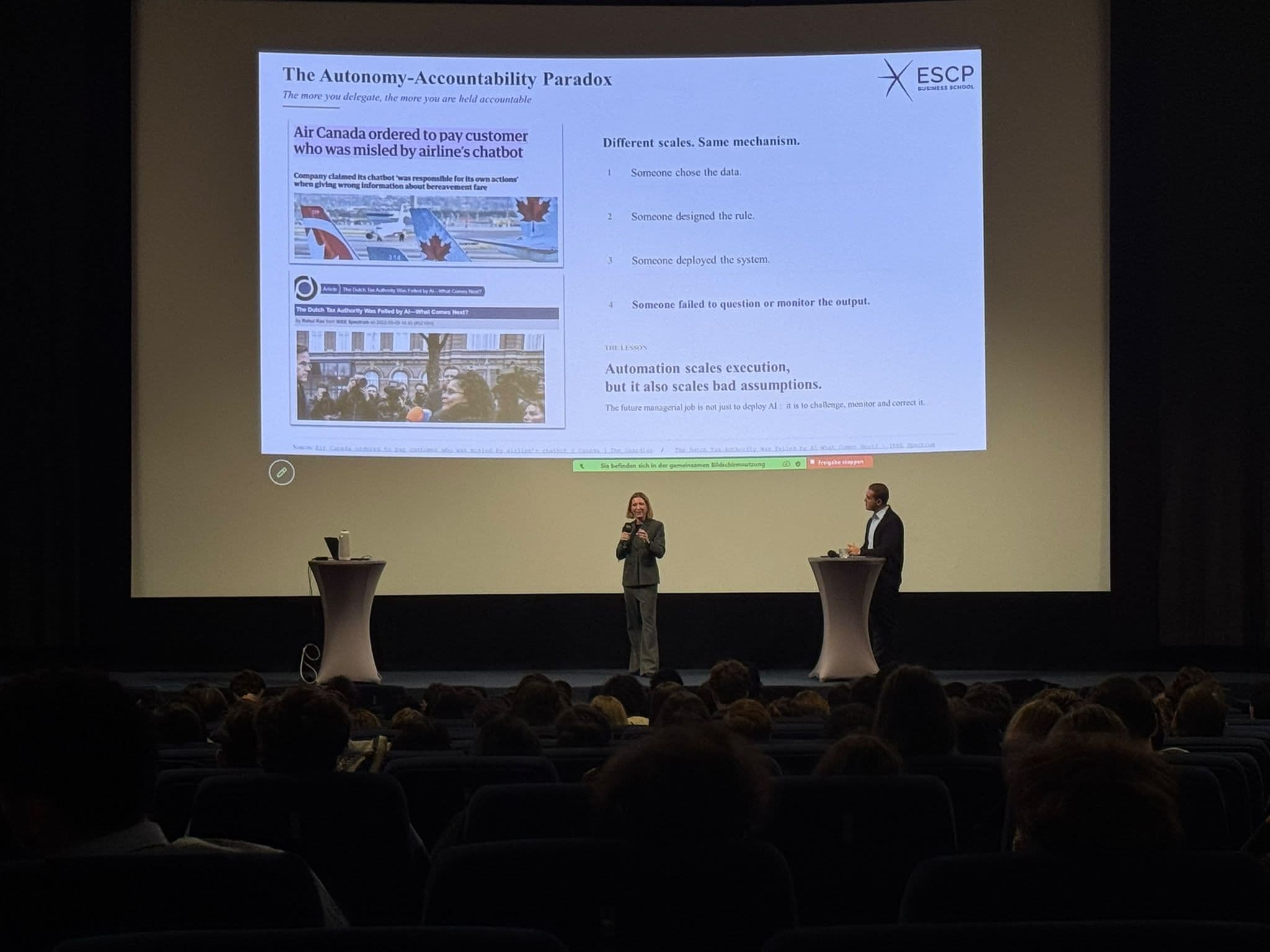
ESCP Berlin: a conference for 800 students, then 210 of them building for two days.
Strategy in the room on the first day, building at the keyboard on the second. Every one of the 34 teams shipped a working product.
- School
- ESCP Business School
- Campus
- Berlin
- Dates
- 10–11 Sept 2026
- Cohort
- Master in Management
The conference
How AI changes management and organisations, with the economic and geopolitical angle.
0students in the room
The workshop
Teams of about six turn an idea into a working prototype with an AI coding agent.
0students, in 34 teams
Live products
Every team handed in a deployed tool, then presented it in front of the room.
0working apps handed in
Two cases. Pick one, see what teams built.
A real, Europe-wide problem worked from public data: pick a stakeholder, define the angle, make a decision, build the tool that supports it.
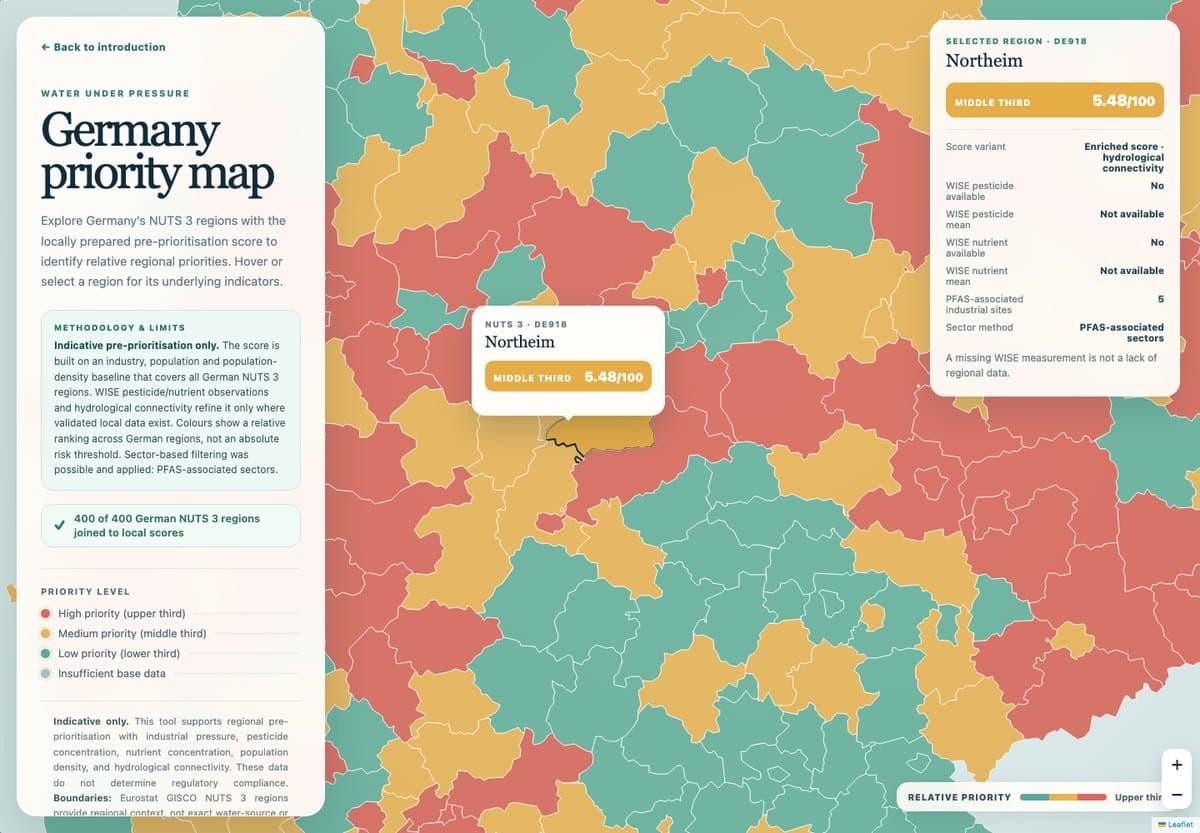
Germany priority map
All 400 German districts scored and coloured, with the limits of the score written next to it.
Team 19
Team
Live
Deployed app
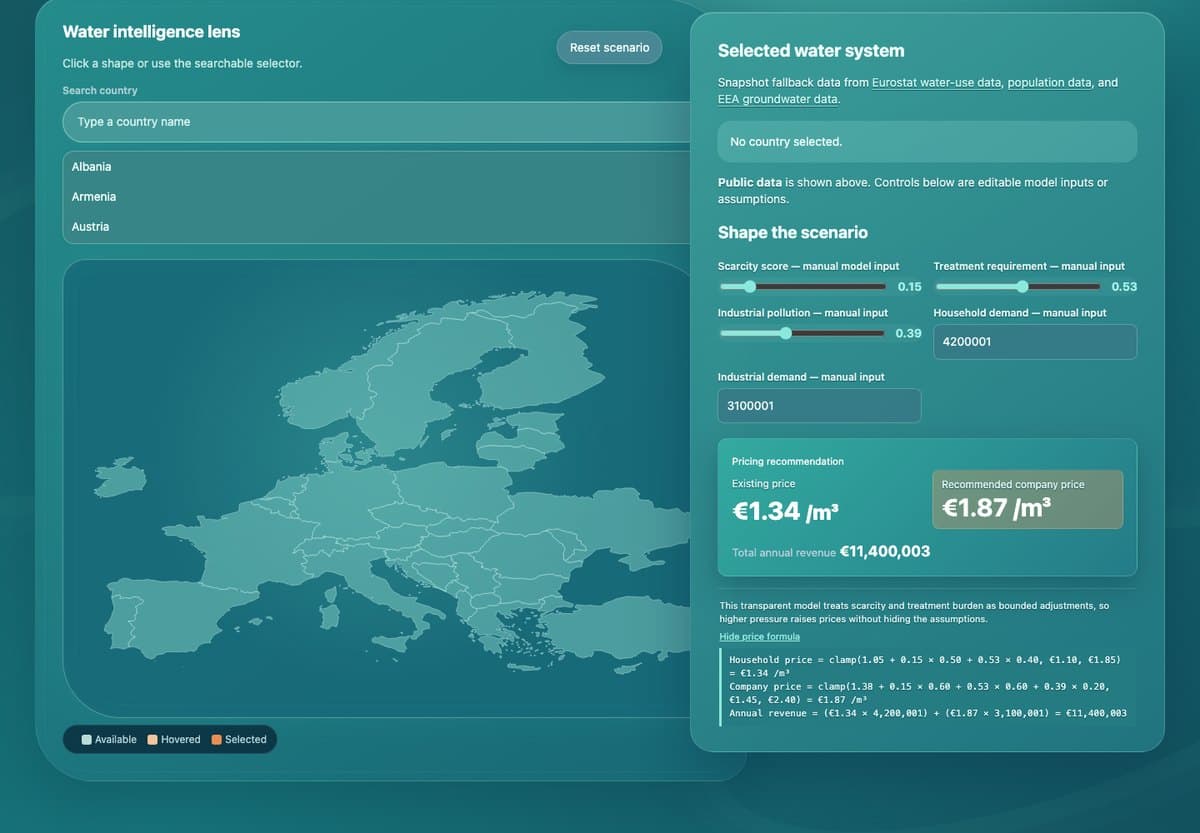
Water intelligence lens
Pick a country, shape the scenario, read the recommended price per cubic metre.
Team 12
Team
Live
Deployed app
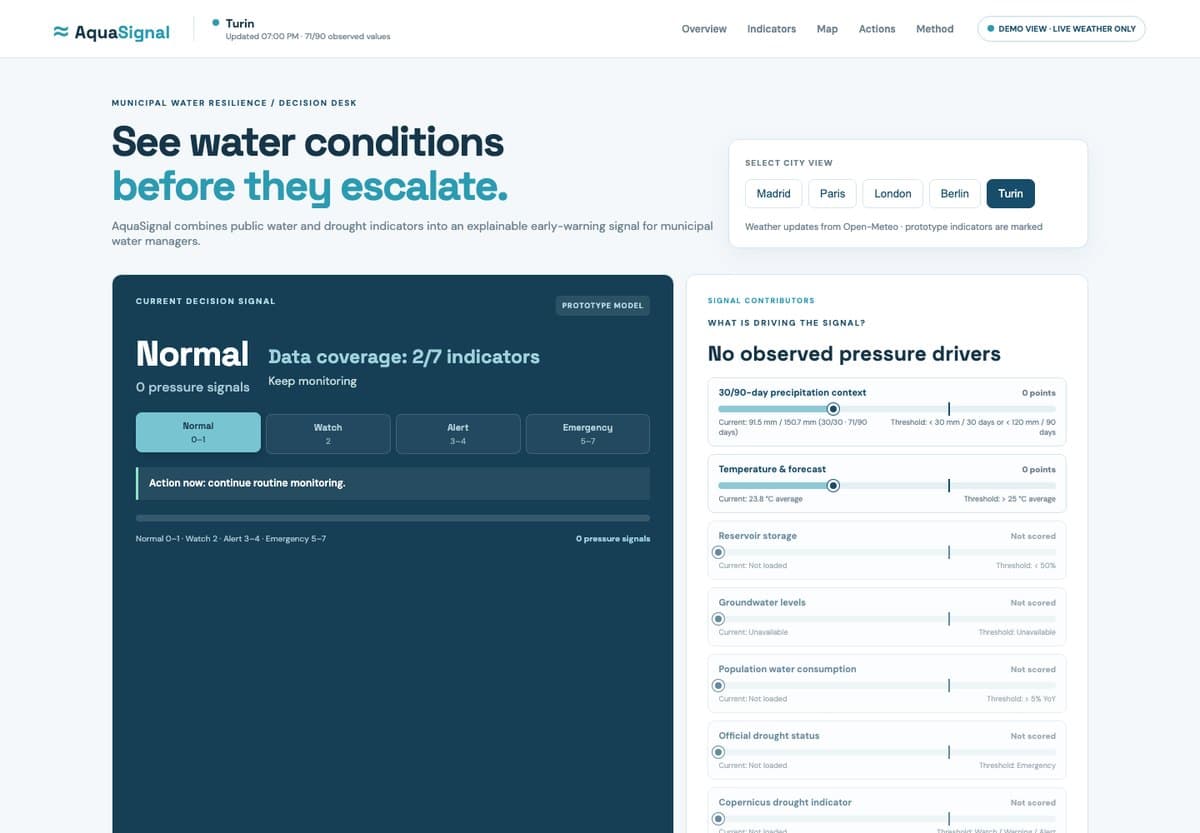
AquaSignal
A signal for city water managers, every prototype indicator marked as one.
Team 22
Team
Live
Deployed app
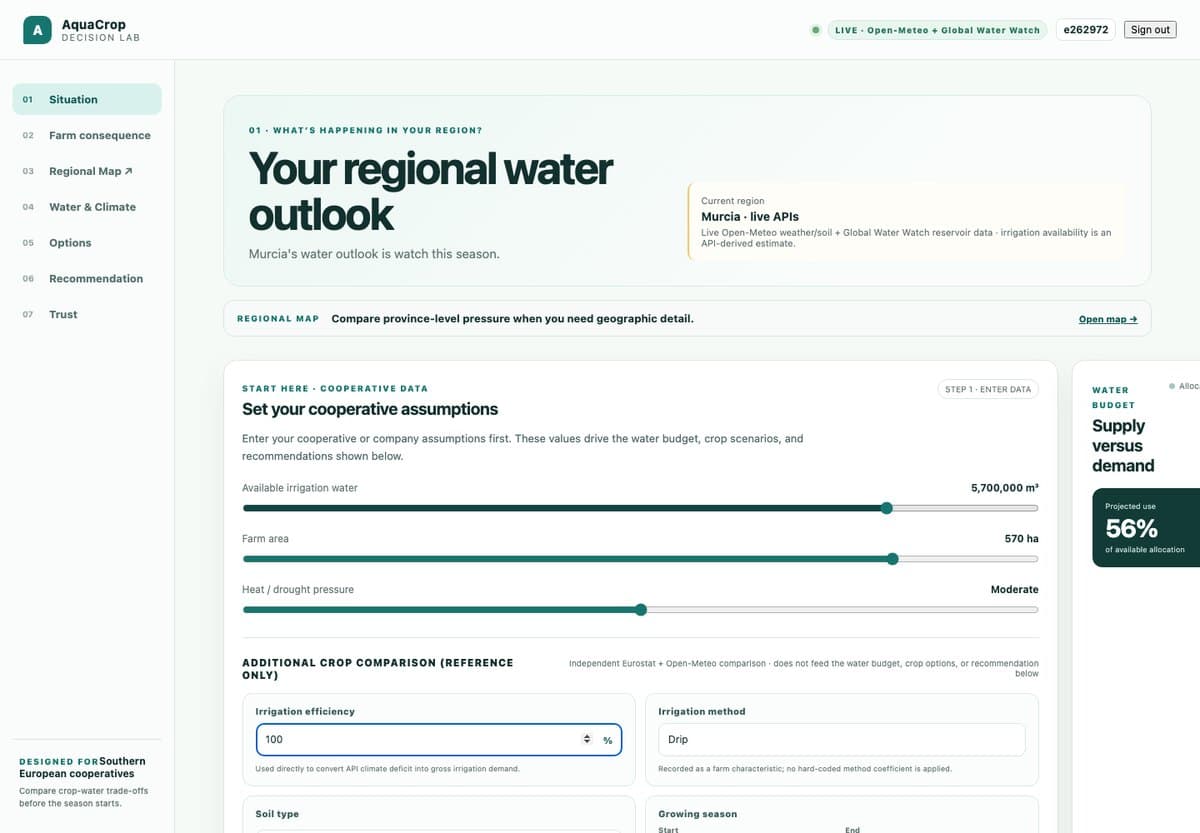
AquaCrop decision lab
A farm cooperative enters its own figures and gets a water budget for the season.
Team 5
Team
Live
Deployed app
Then each team presents, live.
Five minutes on stage, four slides: the problem, the tool working, the decision, and what the tool cannot tell you. Hover a slide, or reach it on a phone, to play it.
01 · The problem
Slide
5:00 left
On stage
Mentor, from the roomSharp framing: two executives, one decision.
02 · Our tool, live
Slide
3:45 left
On stage
Peer, from the roomWe moved the slider ourselves. It holds.
03 · The decision
Slide
2:30 left
On stage
ATELIA, from the roomA clear call, and every figure traced to the data.
04 · What it cannot tell you
Slide
1:15 left
On stage
Mentor, from the roomBest part: you said where the model stops.
Source: ATELIA and ESCP Berlin, 10 and 11 September 2026. App screenshots are the teams' own; the presentation and its comments are an illustration.
Every prompt on record. Written feedback for every team.
We follow how each team works with AI, not only what it hands in. Your faculty gets written, argued feedback, and keeps its own grade if the course needs one.
- MR09:42Load the three sales files and show the margin by city.
- LT09:51The chart is empty for Munich. Here is the error from the console.
- AN10:05Add a slider for the price, from €1.79 to €2.49.
- MR10:18Before we deploy: check that no key is in the code.
- JB10:26Write the limits of the model under the chart.
- What heldThe margin model is right, and the team checked it against the three sales files.
- What did notThe Munich gap was patched, not explained. The demo hid it instead of naming it.
- Next timeWrite the limits of the model before the chart, and test with a file you have not seen.
Quoted from the log, 10:18“Before we deploy: check that no key is in the code.”
Every prompt on record
Each team keeps a log of its prompts: who wrote it, and when. Nothing to install for the students.
Read as a team
The log shows how the team worked together with AI. We give no individual score.
Backed by evidence
Every remark in the feedback comes with a quote from the log or the tool.
The grade stays yours
We write the feedback; your faculty grades, if the course needs a grade. You decide what counts.
Before Berlin, Pauline ran the format at Tsinghua, with an international MBA cohort, and at Princeton, with graduate and undergraduate students. Three campuses, three very different rooms, the same method.
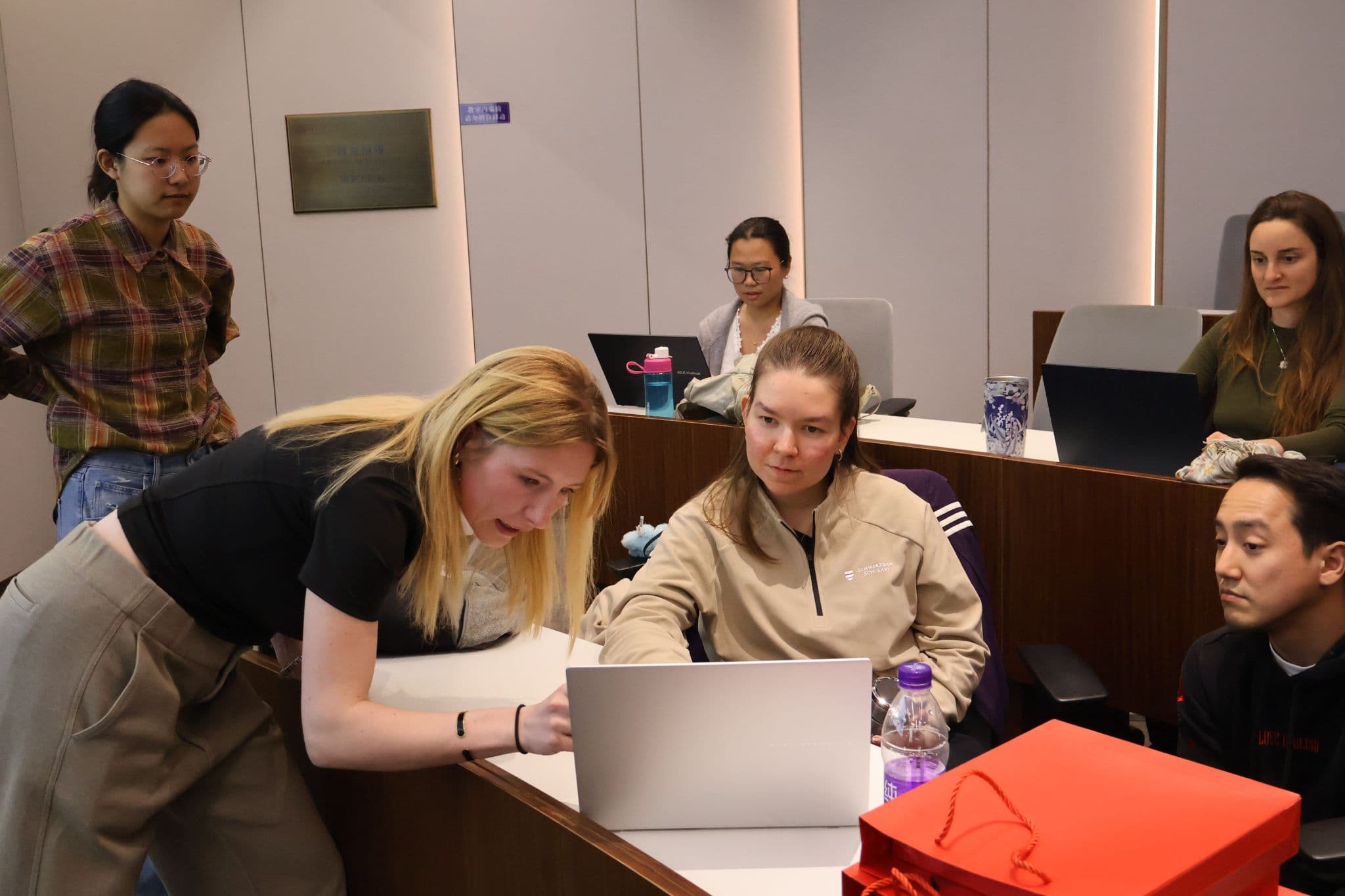
Tsinghua
MBA
Programme
International
Cohort
Workshop
Format
Beijing
Campus
ESCP
210
Students
34
Teams
34
Apps handed in
2
Days on campus
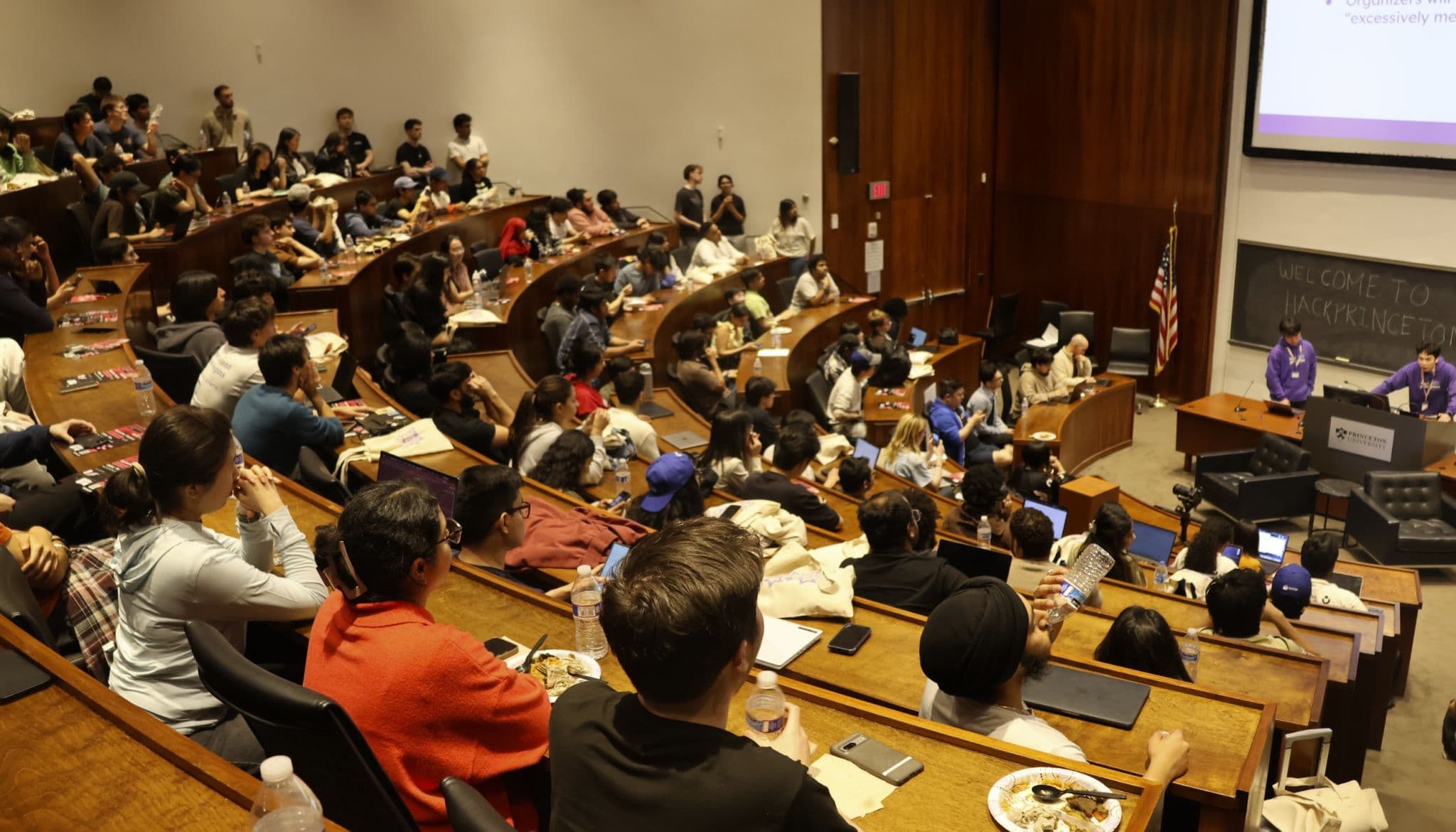
Princeton
Grad
And undergrad students
CS background
Profile
Workshop
Format
Princeton
Campus
Build your session in six choices.
The six questions every school asks us on the first call. Pick an answer for each: your session takes shape on the right, and we finalise it together.
- How long?—
- Which students?—
- Which case?—
- Which AI tools?—
- Teams or individuals?—
- Where does it fit?—
Start with the first question: each answer adds a layer to your session.
Your students keep going, with students from other schools.
The session ends; the practice does not. What every student keeps, free.
- ESCP Business School
- Tsinghua University
- Princeton University
- Your school
Illustration · the schools we have worked with
A community across schools
Students join peers from other universities: they meet, team up across schools and learn from each other's builds.
Open cases
Live company cases
Real questions from companies stay open on the platform, so students can keep building and be seen by the company.
A guide to keep building
A PDF guide to the AI tools they used, with a step-by-step to keep building on their own.
One package for the whole cohort, billed once.

Cohort rate
5,000 €excl. VAT
One-time package, for the entire cohort.
A workshop on your campus, run by our team, with everything the students need to build.
- Travel fees for our team, included
- Our team teaching live, on campus
- Access to the AI tool for every student
- One point of contact, from framing to delivery
Hands-on workshop and talk
A building session with an AI coding agent, and a talk on careers in the AI era, with the geopolitical and economic angle.
A community across schools
Students keep access to the platform and its community, with peers from other universities and live company cases.
A guide to keep going
A PDF guide to the AI tools they used, with a step-by-step to keep building on their own.
What it costs the students, what it asks of your faculty, and who keeps the grade.
What programme directors ask us.
No. The package is paid by the school; students never pay, and their access to the AI tool is included.
No. Our team teaches live, on campus. Faculty are welcome in the room but never required, and nothing in your curriculum has to change.
No. Each team gets written, argued feedback: what held, what did not, what to try next, each point backed by a quote from its prompt log. Grading stays with the school: your faculty decides what counts.
No. A company can bring a question, never the curriculum. The teaching is ours, and your faculty sees every slide before the session.
A room, a date and the students. We bring the case, the tool access, the team and the materials.
Their project, a PDF guide to the AI tools they used, and a place in the ATELIA community: students from other schools, and live company cases to keep building on.
Tell us about the course and the cohort.
We come back to you with a proposed session to shape together, and a time for a call. One of the three founders replies.
contact@ateliaworkshop.ai